


Okay. I feel the need to write about this. I may ramble a little, but hopefully, some of these ideas spark some conversations or thoughts. I think it may be in response a little to my post about Rules. Since we’ve been here, many of our experiences have been attempting to understand the rules. However, there is a difference between a respect for cultural rules and a disregard for rules! Maritza has a highly tuned in sense of cultural appropriateness. I’m not sure if she got some of this from me, or if it is part of who she is. She doesn’t like to be inappropriate. She is a great observer of people.


My own sense of cultural sensitivity probably comes from growing up inside of many different cultures. I remember as a young girl learning to wear skirts in our village instead of shorts. I had grown up to the point of needing to cover my thighs (appropriate clothing for women in our village). I also remember figuring out what to wear in Micronesia. Dressing appropriately was a safety issue. It was appropriate there as well to cover my thighs. Cultural dressing customs are important around the world, aren’t they? In America, women cover their upper bodies, but can leave their arms exposed in hot weather. Men can take shirts off, but not inside a store or at the dinner table. There are signs posted to wear shoes inside of stores. Here in Thailand, it is common to take shoes off before entering a store. There are rows of shoes outside stores.


In Thailand, most women cover their upper arms and thighs. I’ve seen so many instances of travelers (foreigners) wearing tank tops and short (very short) skirts and shorts. I’m not sure I completely understand the point of this. Is it an unawareness? Is it a blatant disregard? Is it done in defiance (it is hot)? Or is it done from a lack of awareness (didn’t read the guidebook or look around)?


What do we expect from visitors to the United States? I’ve heard that we expect them to not wear their cultural head coverings. I’ve heard that we expect women to wear tops (not only bottoms). I’ve heard that we have rules about wearing shoes and shirts in stores. We expect that people don’t splash water on the floor in a public bathroom. We expect people to talk at an appropriate level. There has been quite a bit of talk recently about ‘foreigners’ coming to America. It hasn’t all been nice. So, I’ve been thinking about the other side. What about ‘foreigners’ traveling in other countries?
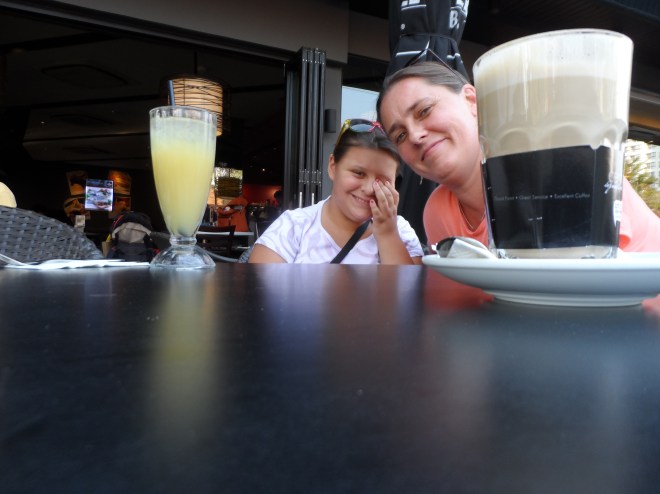
How do we present ourselves in a country that is much more culturally singular, not as diverse? What do we do?


As we were waiting for the bus, foreign women would walk by in tank tops and short shorts. One tall lady with very long bare legs stood inches from a man’s face. He looked away embarrassed. Did she not notice? As I looked around, I saw that all women other than foreigners were wearing pants, long skirts, and shirts with long or short sleeves. There were so very many foreign women wearing short shorts and tank tops. Did they not notice? Thai men and women sat a little apart from each other, quietly talking, as they waited for their bus. Several foreign men and women had their arms around each other, kissing, or touching each others’ bottoms. Did they not notice people looking away, embarrassed?


Why does it seem that foreigners expect to have the comforts of home? Why does it seem that they should feel cheated when having to pay .50 cents more for a ride on a songhiew (public transportation with negotiated prices for rides.) We are the visitors. Shouldn’t we be grateful and respectful guests?


I’ve been asked about whether or not I am cheated as I travel. The answer must be, of course. Although, I’d say that as a guest, I should pay more. Think of it this way, my hourly wage (around $20) can pay for a night’s lodging, an hour long massage, taxi rides to and from a street market, breakfast, lunch and dinner, and drinks for an entire day here. How much are people actually making off of my one hour wage? Of course, I should expect to pay a little more as a visitor. I really shouldn’t have a hissy fit when I’m asked to pay .50 cents more to ride into town than my local neighbor. It is appropriate.

I also think that we should pay attention to the tone and volume of our voices when traveling. If everyone is fairly quiet and uses a gracious and self-effacing tone of voice, then it is our obligation, as guests, to take the same tone. I have not seen one instance in our travels so far where a local person has raised their voice and gotten angry. I have seen the frustrated mocking voices and facial expressions on local salespeople at foreign ignorance. Two men from Denmark were asked to please lower their voices on the bus yesterday. The bus was very quiet, and they were quite loud. Did they not notice?


It is common for salespeople in street markets to say “Sawassdee (hello)”, “Welcome”, and “Please take a look at my stuff.” How many people ignore these requests! How hard is it to turn around, say “Sawassdee”, “Krap Khun Kha (thank you)” and “You have beautiful stuff!” How rude we look as we ignore these cordial invitations and walk away without looking the salesperson in the eye and saying “Sawassdee”.
In Little India, we did walk away. I wrote about it in the Rules. But, I think maybe I was wrong to give this advice to Maritza. I’ve had a more pleasant experience, turning around, saying “Sawassdee, you have beautiful stuff!”. Maritza has noticed the difference as well.


I wrote about Maritza’s bouncy, joyful, busy self surrounded by the still and quiet people in the subway in Singapore. I’ve relaxed a little. Her joyful dancing and determination to become friends with everyone creates more authentic experiences .Last night, we were supposed to be having a relaxing, calm, quiet massage, but she giggled, danced, and bounced the entire way though. The result was a friend who laughed at her, taught her to count in Thai, and gave her a hug as we left. If she had lain there quietly with her eyes closed, appropriately, she wouldn’t have made a friend. She thought it was the best massage ever.


We might wonder, why wear hot clothing? Why talk softly? Why be nice when feeling frustrated? Why not touch each other in public when in love? Why pay attention? (It is hard work…as indicated by my Rules blog). How is it possible to understand and follow every culturally appropriate rule? It isn’t. But, if Maritza and I pay attention and are open and friendly, I think we’ve at least shown that we respect our status as visitors and guests.

That, I know from experience, is important!


 Since we had to wait an extra day for the train, I searched for and found half price tickets to Siam Niramit, a small village replica downtown Bangkok with a spectacular show depicting the various cultures and historical and religious traditions of Thailand. We even managed to navigate the sky train and subway. Of course, she made a friend as we waited for the shuttle bus to the subway. We were glad to attend, but it was a bit tough for Maritza to be feeling miserable. So, we had hour long massages in the middle of the night after the show and went straight up to bed.


 We were nearly home. We trekked up the driveway, peeled our backpacks off, and put our tired feet up.


 They had found us the best room in the entire hotel! I’m sure of it. Of course, I went to apologize from my rude behaviour and was forgiven.


 I find it very soothing to cry in the ocean, and I did. I mourned for Auntie Elaine and missed my dad, mom, and sister at the funeral. Maritza and I had time to talk about expectations and our different needs. A Jellyfish stung my foot on the first day of swimming. The pain was pretty incredible, but we found ‘beach boy’ friends who cared for us. Even on the last day, they swam in the pool with Maritza and felt sad about her leaving.


 A Duet In Discovery